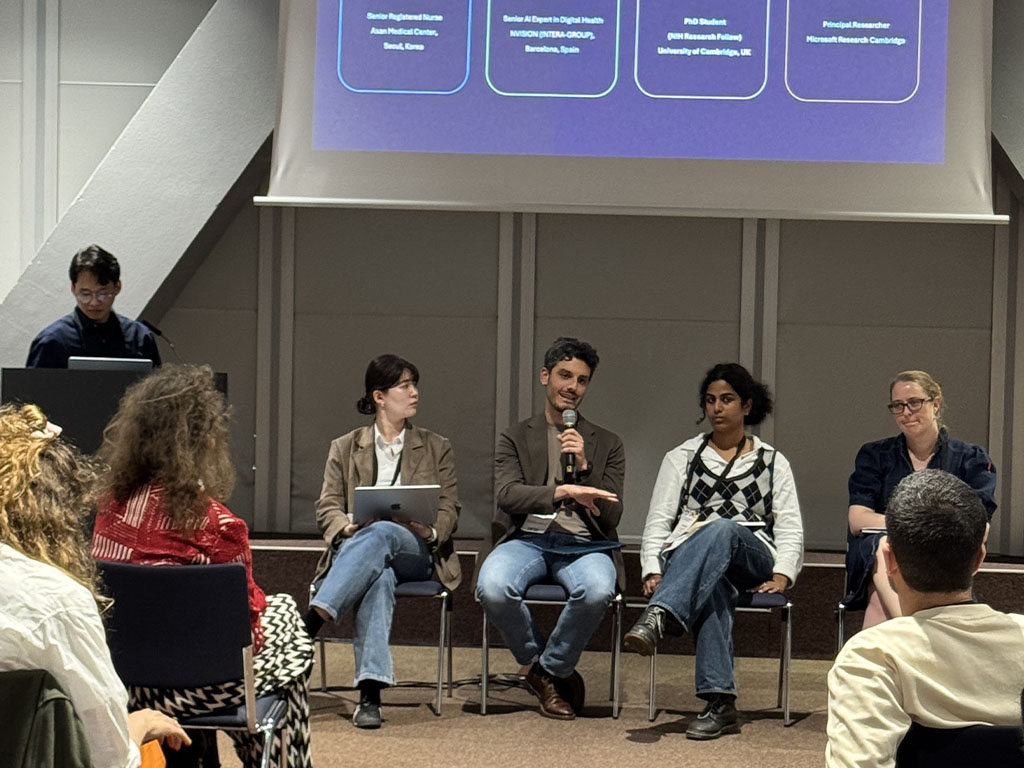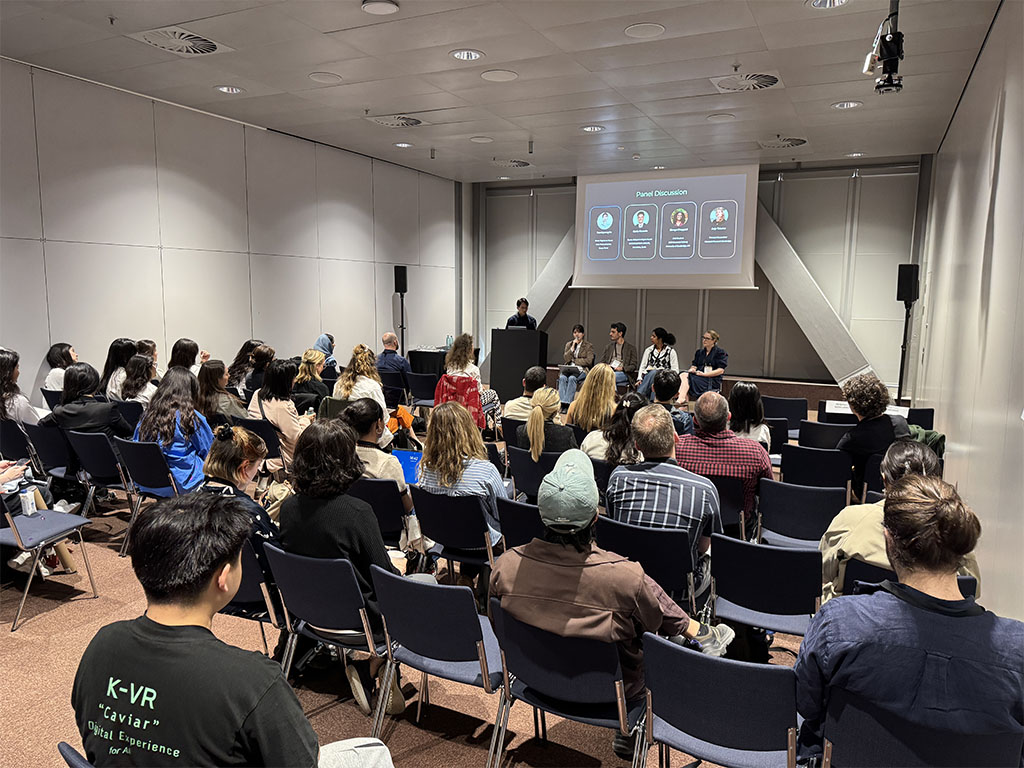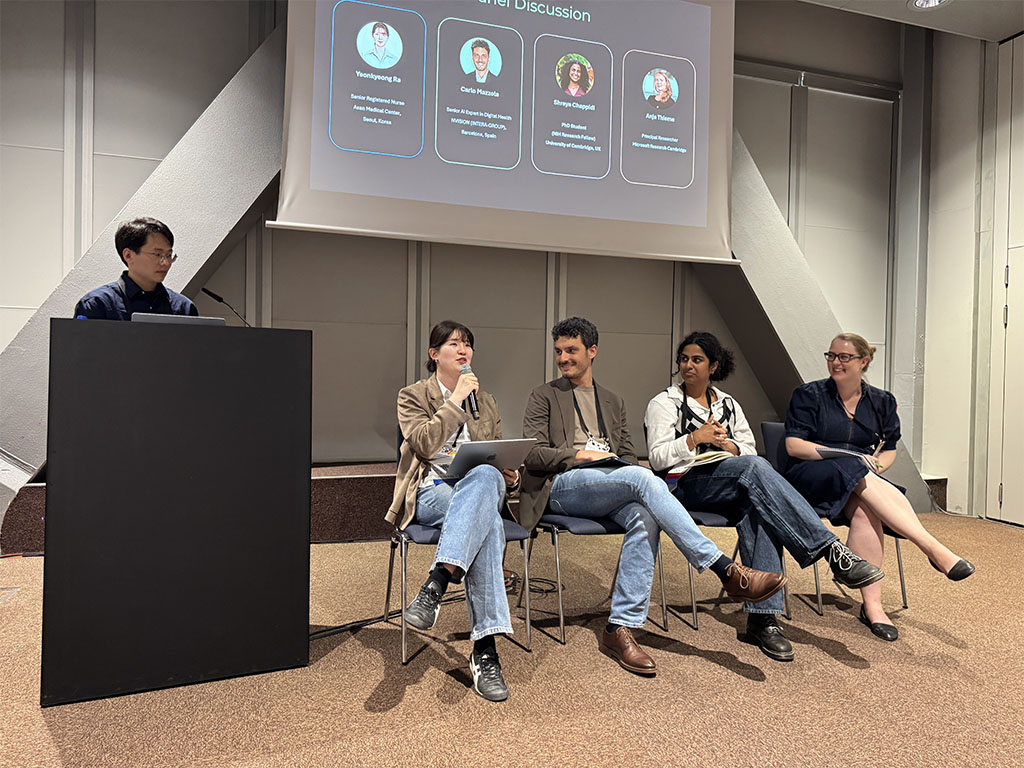
The CERTAIN project made a meaningful impact at the ACM CHI Conference on Human Factors in Computing Systems (CHI 2026), the world’s leading venues for Human-Computer Interaction research, this year held at the Centre de Convencions Internacional de Barcelona. On April 16, Carlo Mazzola from NVISION participated as an invited panelist in the workshop “Toward Relationship-Centered Care with AI,”.
The workshop brought together an international community of researchers and practitioners to examine how AI systems can be designed to support, rather than undermine, the human relationships that sit at the heart of healthcare.
A Workshop at the Intersection of AI, Healthcare, and Human Relationships
The workshop introduced relationships as a central design lens for AI in healthcare, moving beyond the narrow framings of operational efficiency. Attendees explored how AI systems shape interactions across patient–provider, patient–caregiver, caregiver–provider, and provider–provider contexts, with attention to how design choices around data, explainability, and system transparency can either support or erode trust between patients, caregivers, and clinicians.
Key themes included:
- Barriers and opportunities: The structural, technical, and cultural obstacles AI may pose to human relationships in clinical settings, and where it can actively strengthen them.
- Transparency and explainability: The need for AI-driven healthcare systems to remain interpretable and accountable to all actors in the care network.
- Design principles in practice: What a genuinely “relationship-centered” AI system looks like — and how it should be developed and governed to serve human connection rather than replace it.
CERTAIN’s Contribution: Fair and Responsible AI for Mental Health
- Carlo Mazzola presented work directly rooted in the CERTAIN project, offering a technical perspective on how the project’s tools and methods are being applied in sensitive, high-stakes clinical contexts.
- Central to the presentation was CERTAIN’s work on fair and unbiased AI development using synthetic data generation for Medical IoT applications, situated within the project’s pilot on digital health support systems for the early diagnosis and monitoring of childhood psychiatric disorders. This pilot exemplifies the real-world stakes of responsible AI: data collected unobtrusively from young patients must be handled with the utmost care for privacy, fairness, and clinical utility.
- The presentation drew a direct line between CERTAIN’s technical objectives and the principles of Relationship-Centered Care. By improving AI fairness and transparency in clinical decision support systems, CERTAIN is not merely addressing a regulatory requirement, it is actively contributing to the conditions under which trust between patients, caregivers, and clinicians can be maintained and strengthened. An AI system that is opaque or biased risks eroding the very relationships it is meant to support; one that is explainable and equitably designed can empower clinicians and reassure families.
By bringing these contributions to CHI 2026, CERTAIN reinforced its commitment to demonstrating the applicability of its framework across diverse, socially significant sectors. The workshop provided a timely forum to connect the project’s technical advances in AI certification and fairness with the lived realities of healthcare professionals, patients, and caregivers, and to affirm that responsible AI development and relationship-centered care are not competing goals, but deeply complementary ones.